Nobody wants to talk about war
The wind was changing direction. It was my father who had taught me to do that: to read the mountain skies in summer. I still do it, out of habit, and sometimes people wonder why I suddenly stop and say nothing. I stare intensely at the sky as if I were talking to it, but in reality, I’m listening.
The shape of the clouds, their colour, the speed at which they move: you just need to know how to read the signs. It’s all there. And it seemed clear to me that a storm was approaching.
They set fire to three cars last night. Just round the corner. And the van belonging to the glazier who’s lived downstairs for… as long as I can remember was burnt to the ground. Up on Independència Street too, apparently.
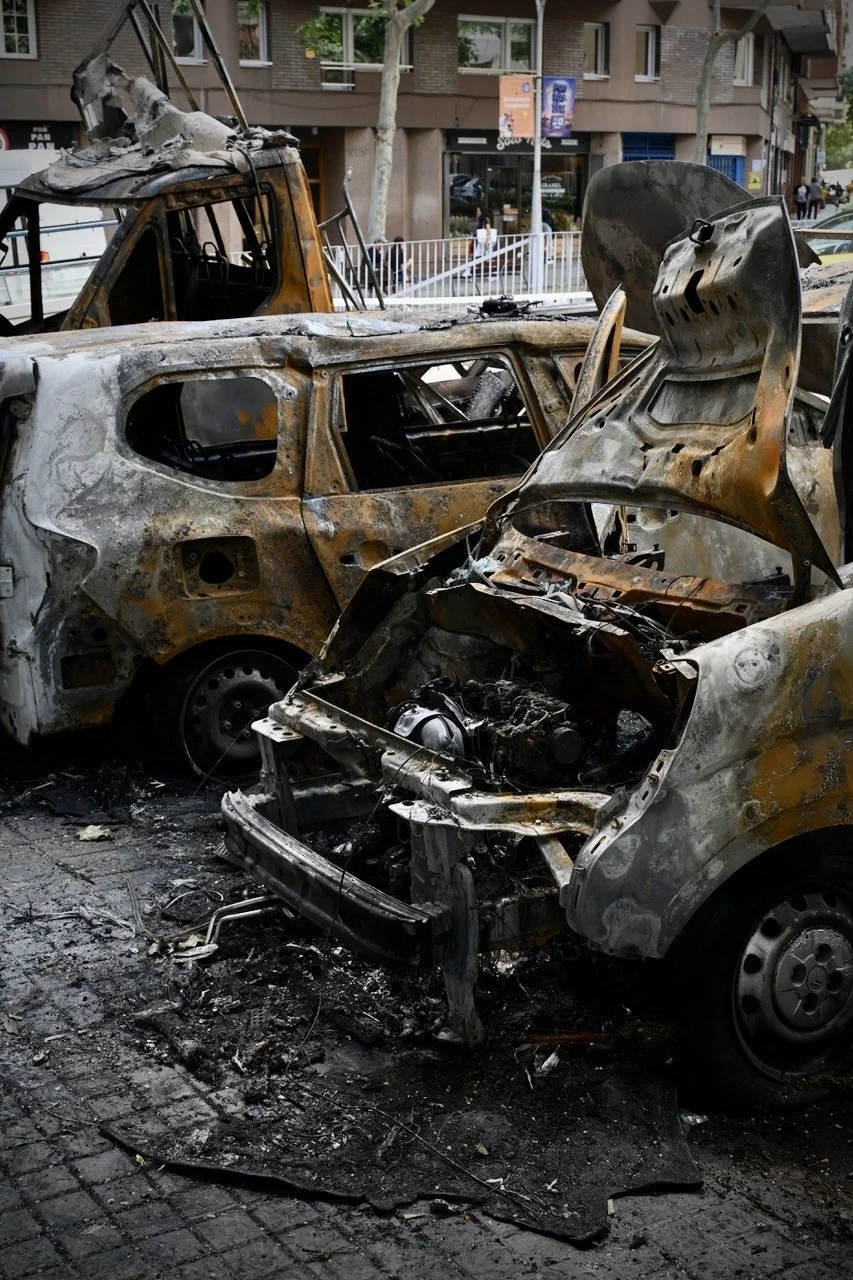
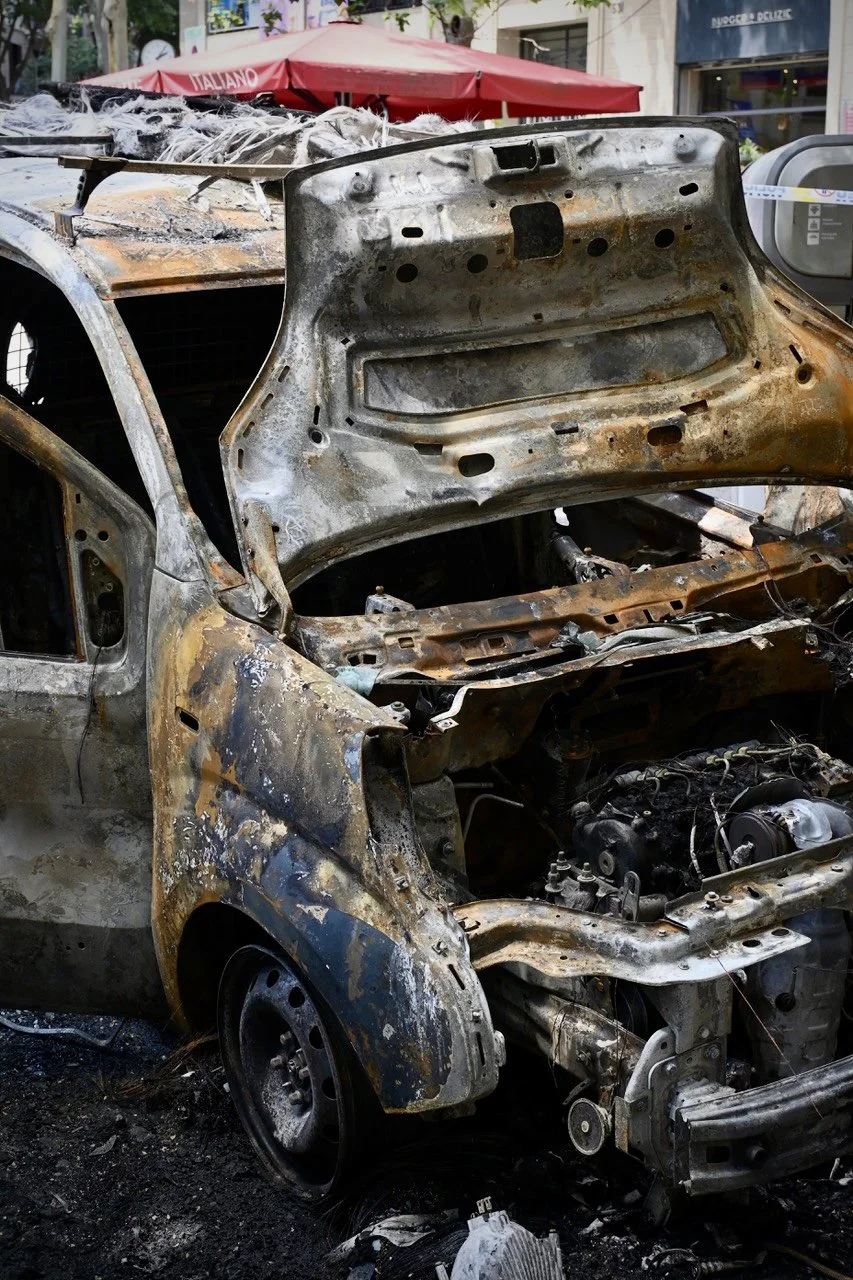
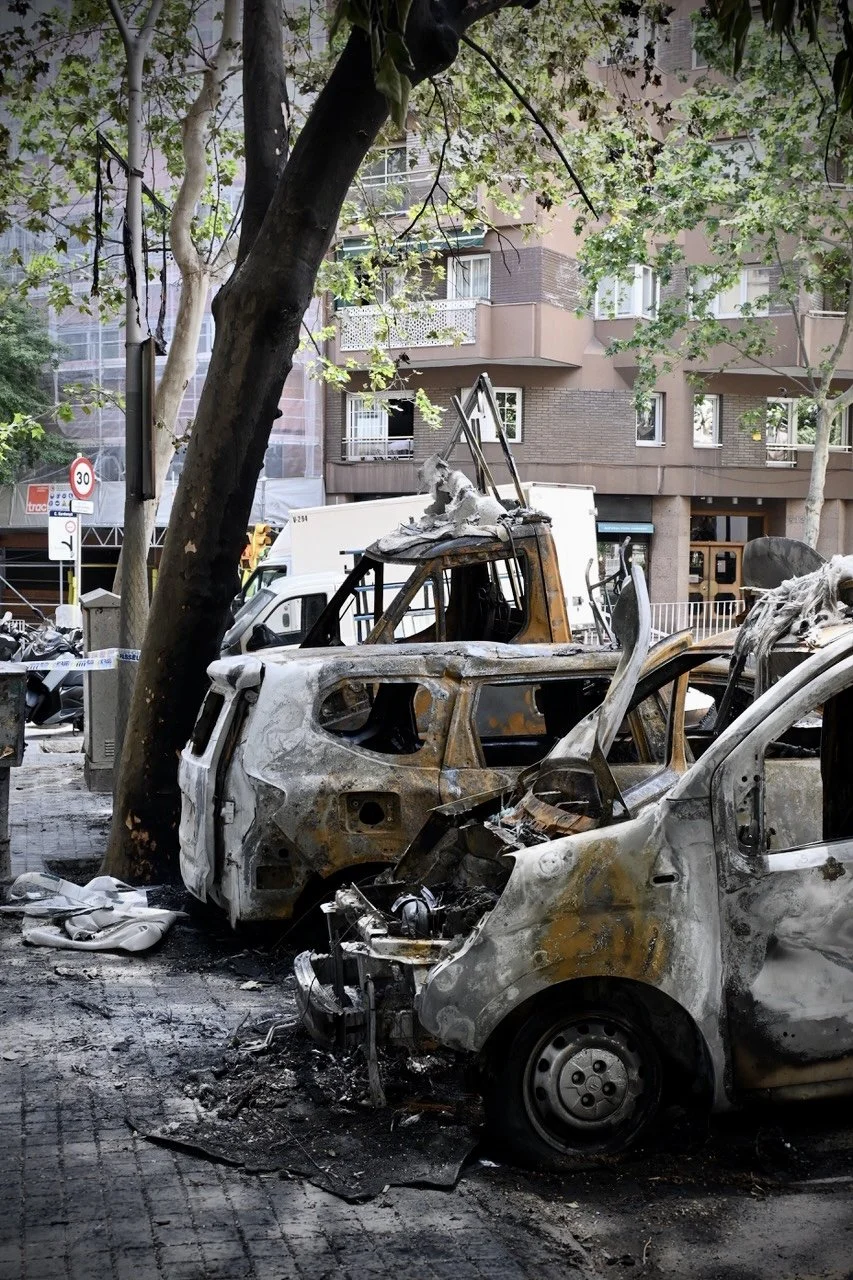
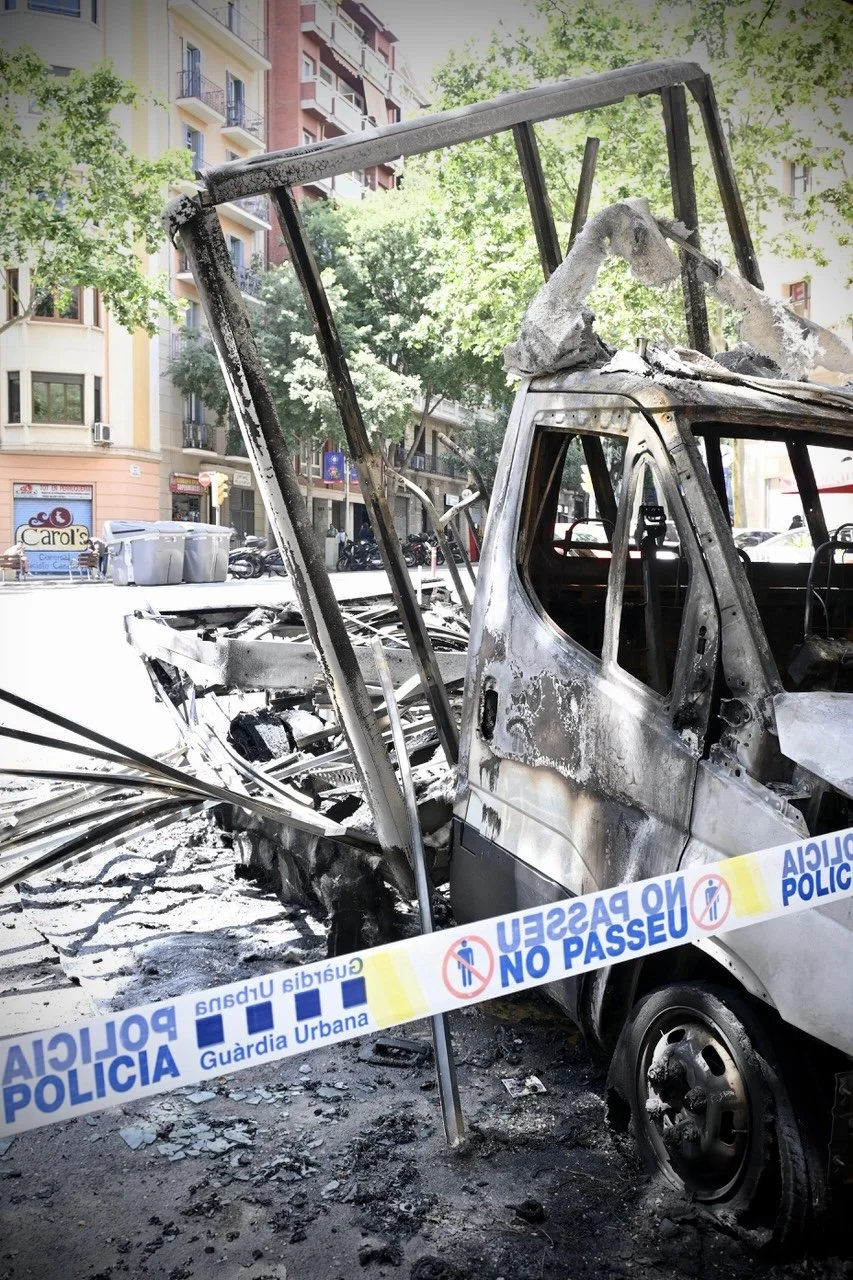
But just this morning, we were laughing with Ella; the sun was shining brightly and she had a rainbow on her cheek, reflected by the glass in the window; we were looking at dresses for her brother-in-law’s wedding, saying ‘Tuscany, Tuscany’ with a snobbish air… But ‘Tuscany’—can you hear how that word sounds…?
Then the sky clouded over, though not for long. But as I was coming home, I saw a pile of boxes by the bins, and on the ground, right in front of them, a plastic sub-machine gun, which I was going to take a picture of because I found the coincidence of the scene rather odd. The burnt-out cars, the sub-machine gun. But when I came back from the supermarket, someone had put it back in its place amongst the boxes, barely visible. Don’t you find that strange? I might not be the only one who noticed it.
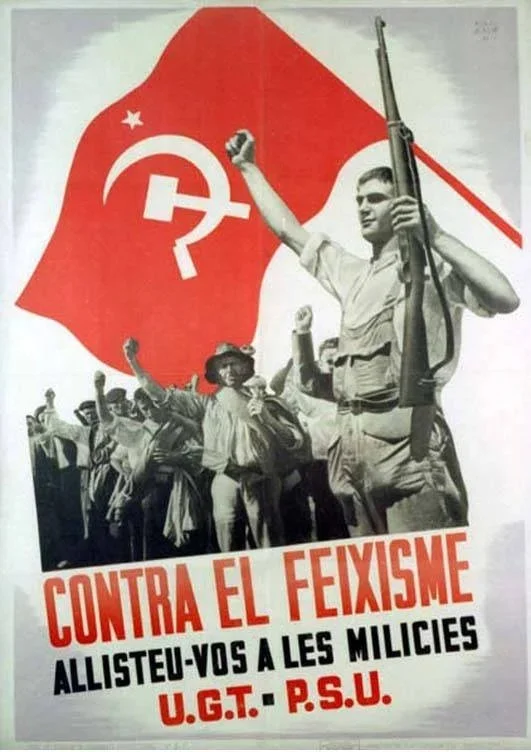
I’m reading a book about the Spanish Civil War, and right at the start there are some propaganda posters from 1936 that read: “Against fascism, join the UGT militias”. 1936. When I bought the newspaper the other day, I got caught by the front page: the May Day campaign. “Against wars and fascism, vote UGT”. 2026.

I was riding my bike when I felt the first raindrops fall. One on my hand, one on my forehead. Two blokes were arguing at the traffic lights. And then I had that vision again: of the old man who, at dawn, as he took out the rubbish, was kicking a cardboard box savagely.
On my knees in the deserted church, I am about to begin my shift. Everything is spinning. The images are flashing by too quickly.
The sun, the sea — it was only yesterday, but the birds were already flying low; I should have seen it coming.
And I, too, am angry, but there’s no one I can talk to about it.
The power’s gone out. Every time I see the face of Christ, my sweet Jesus, it’s because the purple flashes of lightning suddenly light him up, and I can’t help it, it sends a shiver down my spine.
Are dreams memories of another life?
I close my eyes even tighter and I see them down below, tiny things: I take aim. I shake my head. One mustn’t think about that sort of nonsense.
The walls are shaking; this time, the lightning has struck the hill directly.
I stand up. This Christ is massive, and I ask His Father for a sign. I open the book into which, without my noticing, my fingernails have dug in. I take a breath, and randomly, I read:
“All nations are as nothing before him,
They are but meaningless and vanity to him.” ¹
Suddenly, there is a great silence. And I know it won’t last, but I gather my wits. The storm isn’t quite so close after all, but we can hear it rumbling in the distance — that familiar sound: a hundred-year-old thunderclap approaching. —
¹ : Isaiah, 40:17
² : Watch The Mission, a 1986 masterpiece starring Jeremy Irons and Robert De Niro.
³ : Read also: You know well it will be me, Diary (Volume IV), by Julien Green.
🇬🇧 The PDF version here — Print it, save it, share it.